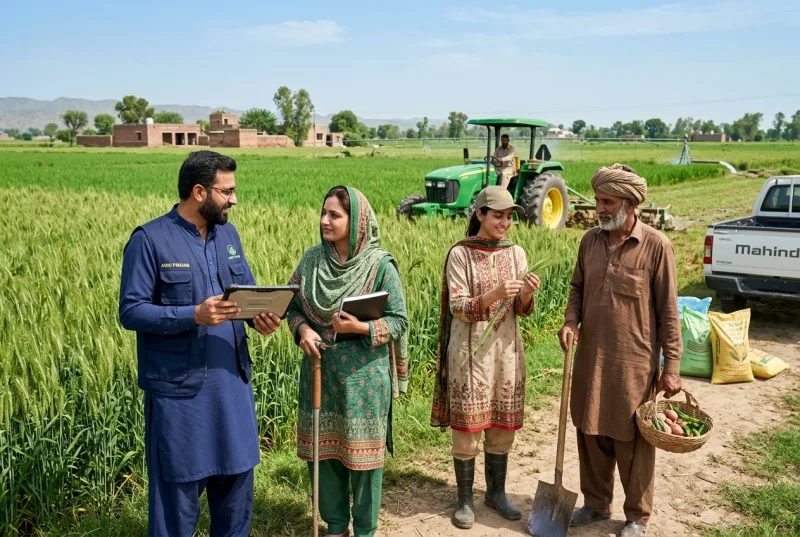
Agriculture is one of the last big sectors to go fully digital, which is exactly why there's an advantage for the businesses that do it well. Farmers increasingly research seed varieties, compare machinery, watch product demonstrations and ask questions online, whether they farm wheat in Kansas, canola in Saskatchewan, dates in Saudi Arabia, cotton in Punjab or sheep in New Zealand.
Who agricultural marketing serves
| Business type | Typical customers | What they need to show |
|---|---|---|
| Seed companies | Farmers, dealers, cooperatives | Yield data, disease resistance, regional suitability |
| Fertiliser and crop protection | Farmers, agronomists, dealers | Results, safe use, application timing |
| Machinery and equipment | Farmers, contractors | Performance, servicing, finance, dealer support |
| Irrigation and water | Farms, estates, landscapers | Water savings, reliability, installation |
| Farm produce and exporters | Wholesalers, retailers, importers | Quality, certifications, supply reliability |
| Agri-tech and software | Larger farms, agribusinesses | Return on investment, ease of use, support |
Know the crop calendar
Demand follows the season. A seed campaign launched at sowing time is already too late; farmers decided weeks earlier.
- Before the season: education and comparisons, such as variety trials, product guides and webinars.
- Decision time: offers, dealer promotions, demonstration days and direct enquiries.
- During the season: timely advice on application, pests, weather and troubleshooting.
- After harvest: results, farmer stories and planning for next season.
Marketing channels that work
- A clear website with product pages by crop and region, a dealer locator and simple contact options.
- YouTube and short video: demonstrations, field results and how-to guides. Video travels well among farmers.
- WhatsApp and messaging: for enquiries, dealer communication and advice where it's widely used.
- Search: SEO and Google Ads for product, problem and dealer searches.
- Social media: Facebook groups and pages remain strong in many farming communities.
- Field days, trade shows and agricultural events, promoted online before and followed up after.
- Email and SMS: seasonal reminders, weather-related advice and offers.
- Trade press and podcasts trusted by farmers in your region.
Messaging that earns farmers' trust
- Show real results from local trials, with the conditions explained.
- Use farmers' own words and stories, with their permission.
- Give practical advice, not just product promotion.
- Be honest about where a product works best and where it doesn't.
- Use the local language and units farmers use.
Supporting dealers
- Give dealers ready-to-use materials: product sheets, social posts and videos.
- Keep a dealer locator accurate and up to date.
- Share leads quickly with the right local dealer.
- Run co-op campaigns that promote both your brand and the dealer.
How this works worldwide
The principles hold everywhere, but the farmer and the season change. Large commercial farms in the USA, Canada and Australia want return on investment data and agronomist-backed proof. Smallholders in Pakistan and much of Asia and Africa rely on dealers, local-language video and WhatsApp. The Gulf focuses on water efficiency and food security. Plan around your own markets' crop calendars.
What to measure
- Enquiries by phone, WhatsApp, form and dealer locator use.
- Dealer orders and sell-through by region.
- Demonstration day attendance and follow-up conversions.
- Video views from your target regions, not just total views.
- Repeat purchases season to season.
Frequently Asked Questions
Do farmers really use the internet to buy?
Yes. Even when the final purchase happens through a dealer, research often starts online with videos, reviews and product pages.
Which channel should an agri business start with?
Usually a clear website plus YouTube or short video, supported by WhatsApp or phone for enquiries and good dealer materials.
How far ahead should seasonal campaigns start?
Typically six to ten weeks before sowing or the main buying window, with education starting earlier.
Should we sell directly online?
Some products, such as small equipment, supplies and specialist inputs, sell well online. For many inputs, supporting dealers works better than competing with them.
Sources & References
Written by Farzeen Rasheed
Ready to improve your marketing results?
Book a free strategy call - we'll audit your current setup and identify the highest-impact fixes.